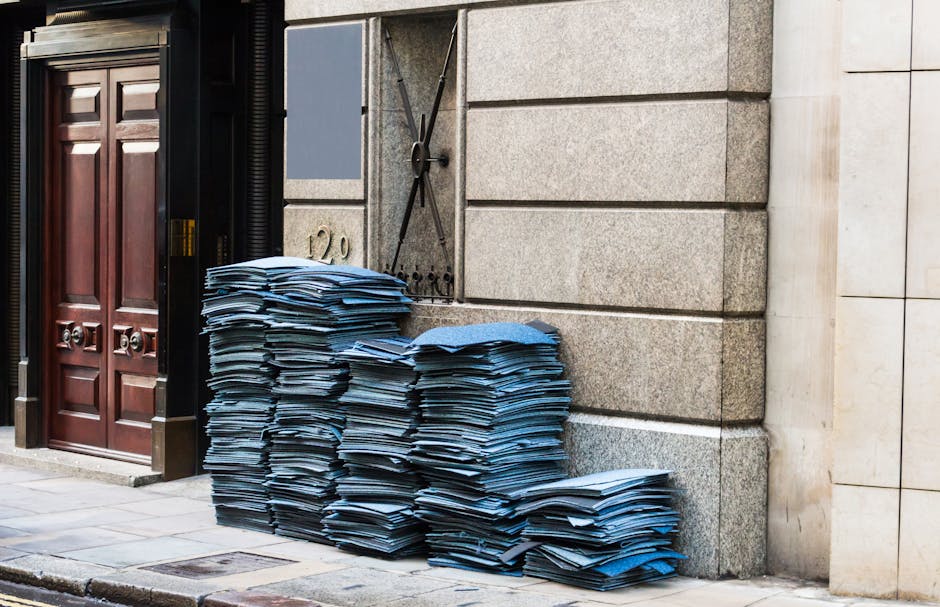
Carpet disposal and donation rules in Islington Council
If you have an old carpet rolled up in the hallway, you already know the awkward part isn't lifting it. It's figuring out what on earth to do with it. Carpet disposal and donation rules in Islington Council can feel a bit murky at first, especially if the carpet is bulky, partly worn, or still in decent condition. Should it be reused? Bagged? Taken to a reuse route? Treated as waste? The answer depends on condition, fibre type, size, and whether it can be passed on safely.
This guide breaks the topic down in plain English. You'll learn how carpet disposal and donation usually works in a London borough setting, what to check before you hand anything over, where people often go wrong, and how to choose the most sensible option without making the job harder than it needs to be. Truth be told, the difference between a tidy, compliant disposal and a frustrating rejected collection is often just a few small details.
Before we get into the finer points, here's the key idea: if a carpet is clean, dry, and genuinely reusable, donation or reuse is usually the first thing to consider. If it is damaged, damp, badly stained, or heavily fitted with underlay and grippers still attached, disposal is more likely the right route. Simple enough. But not always simple in practice.
Table of Contents
- Why Carpet disposal and donation rules in Islington Council Matters
- How Carpet disposal and donation rules in Islington Council Works
- Key Benefits and Practical Advantages
- Who This Is For and When It Makes Sense
- Step-by-Step Guidance
- Expert Tips for Better Results
- Common Mistakes to Avoid
- Tools, Resources and Recommendations
- Law, Compliance, Standards, or Best Practice
- Options, Methods, or Comparison Table
- Case Study or Real-World Example
- Practical Checklist
- Conclusion
- Frequently Asked Questions
Why Carpet disposal and donation rules in Islington Council Matters
Carpets are one of those household items that look simple until you try to get rid of them. They are bulky, awkward to carry, and sometimes full of hidden issues like damp backing, dust, old adhesives, or pet odours. In a dense area like Islington, that matters even more because shared access, narrow stairwells, and limited storage can quickly turn a small clearance into a messy one.
The rules matter for a few practical reasons. First, a carpet that could still be reused shouldn't be treated like mixed waste if there's a better option. Reuse keeps useful material in circulation and reduces the amount going to disposal routes. Second, if a carpet is not suitable for reuse, it needs to be presented in a way that's safe, manageable, and acceptable for the chosen collection or drop-off method. Third, letting a carpet sit around for too long creates a chain reaction: dust, tripping hazards, and the lovely little soundtrack of "I'll deal with it later."
There's also a fairness point. Disposal services, reuse channels, and residents' collections all work better when items are sorted properly. That may sound basic, but in real life it saves time for everyone. If you have ever tried to drag a damp roll of carpet down three flights of stairs on a wet afternoon, you already know why planning matters.
Practical takeaway: Before you decide how to remove a carpet, check whether it is reusable, recyclable in practice, or truly waste. That one decision usually determines the cleanest, cheapest, and least stressful route.
For readers also handling a broader clear-out, it can help to think of carpet removal as one piece of a bigger project. If you are already organising furniture, fixtures, or post-renovation debris, our house clearance service overview may be useful for understanding how larger clearances are planned. And if the carpet is being removed after a redecoration or tenancy change, the end of tenancy cleaning page gives a sense of how a property is usually brought back to a neat standard.
How Carpet disposal and donation rules in Islington Council Works
At a practical level, carpet disposal and donation in Islington usually comes down to one question: is the carpet fit for reuse, or does it need disposal as waste? That sounds blunt, but it is the cleanest way to think about it. A carpet in good condition may be suitable for donation or resale through reuse channels. A carpet with visible wear, odour, heavy staining, mould, or water damage usually is not.
Donations tend to work best when the carpet is still clean, dry, and usable without significant treatment. Think of a room carpet that has been lifted carefully, is free from deep damage, and has enough life left for someone else's home. Not a miracle, just sensible reuse. On the other hand, if the carpet has been glued down, cut into strips, or mixed with lots of adhesive residue, disposal becomes more likely.
Size and handling matter too. A carpet can be technically reusable and still be awkward to donate if it is oversized, difficult to transport, or not easy for a reuse organisation to store. In those cases, the best route may be a proper disposal option rather than wasting everyone's time.
If you are arranging removal from a flat, maisonette, or office, the logistics matter as much as the carpet itself. Stairs, parking, lift access, and whether the carpet has been cut into manageable sections all affect the process. The same is true for heavier materials like rugs and underlay. A small tweak before collection can make a surprisingly big difference.
For nearby fabric or soft-furnishing items, it's often sensible to compare the carpet with other textile-related services so you don't separate jobs unnecessarily. For example, if your carpet and rugs are both due for attention, the rug cleaning and carpet cleaning pages are a useful reminder that some items are worth restoring rather than replacing. Same goes for soft furnishings; if the rest of the room is tired too, upholstery cleaning can sometimes help refresh a space without more waste.
One thing people often miss: disposal routes are not just about removal. They are also about presentation. A carpet rolled, taped, kept dry, and handled cleanly is far easier to move than one left loose, muddy, or half-cut with nails sticking out. Small detail, big difference.
Key Benefits and Practical Advantages
Getting carpet disposal or donation right has benefits beyond simply clearing floor space. It can save money, reduce stress, and keep a project moving. To be fair, once a carpet is out of the way, the room instantly feels less chaotic. You can hear your own footsteps again. The place breathes a bit.
- Less waste: Reuse keeps serviceable carpets in circulation instead of sending them straight to disposal.
- Cleaner handover: A well-managed removal is easier if you are moving out, renovating, or preparing a property for sale.
- Fewer collection issues: Preparing carpets properly reduces the risk of rejection or delays.
- Safer handling: Folded or rolled carpets are easier to move and less likely to cause trips or blocked corridors.
- Better value: A reused or donated carpet may help someone else while reducing your disposal burden.
There is also a practical "time saved later" benefit. If you sort out whether a carpet can be donated or must be disposed of before removal day, you avoid those last-minute decisions with a van waiting outside and everyone getting a bit twitchy. We have all been there, or something close to it.
For properties where sustainability is a real priority, it makes sense to think about the carpet as part of the wider cleaning and waste-reduction picture. If you are actively trying to reduce unnecessary disposal across the home, the recycling and sustainability page can help frame the bigger picture. It's not just a feel-good label; it's a useful way to make better decisions around what stays, what gets cleaned, and what should go.
Who This Is For and When It Makes Sense
This topic is relevant to a lot of people, not just landlords or contractors. In fact, the most common situations are everyday ones.
- Homeowners replacing old carpet during a refurb or redecorating project.
- Tenants leaving a property and wanting to avoid issues with bulky waste or damage.
- Landlords and letting agents dealing with worn flooring between tenancies.
- Small businesses clearing office or shop flooring during fit-outs or relocations.
- Property managers handling communal or repeated clearance needs.
It also makes sense whenever a carpet has reached that awkward middle ground: not horrible enough to be landfill in your mind, but not clean enough to casually give away. That is where judgement matters. If the carpet smells musty, has pet urine damage, or has visible mould along the underside, donation is generally not appropriate. If it is clean, has only light wear, and can be passed on safely, reuse is worth considering.
There's a point at which delaying the decision becomes the real problem. A carpet kept in a corner for "just a few more days" can gather dust, pick up moisture, and become harder to move. Quite often, the right route becomes clearer once you ask a simple question: would I be happy to receive this carpet myself?
If your project is more than one room, or if carpet removal is part of a larger move, the surrounding service choice matters too. A broader move out cleaning plan can make the handover smoother, while move in cleaning is often the next step once old flooring is gone and the room needs a fresh start. Small chain, big relief.
Step-by-Step Guidance
Here is a simple, practical way to handle carpet disposal and donation without overcomplicating it.
- Inspect the carpet carefully. Check for stains, tears, damp patches, mould, heavy odour, and wear on the backing. Flip it over if you can. The underside often tells the truth faster than the top.
- Decide whether it is reusable. If it is clean, dry, and structurally sound, reuse or donation may be appropriate. If it is damaged or unhygienic, move to disposal.
- Remove all fixings. Pull up any grippers, nails, staples, and loose underlay. These are not just annoying; they can make the item unsafe to handle.
- Measure and prepare. Large carpets may need cutting into manageable sections. Roll or fold them neatly, and keep them dry.
- Separate related materials. Do not mix carpet with building rubble, food waste, or unrelated items. If underlay is included, keep it separate if your disposal route requires that.
- Check access and timing. Make sure the route out of the property is clear. In a stairwell, that one stray bag can become a world-class obstacle.
- Choose the right route. Use donation if the carpet genuinely qualifies. Otherwise, use the most appropriate disposal method available for bulky household waste or clearance.
- Confirm final acceptance rules. Some services are strict about cleanliness, size, and moisture. Better to check beforehand than find out at the kerbside.
If the carpet is being removed for a renovation, consider the other items coming out at the same time. A coordinated approach can reduce repeat visits and save you from the classic "we forgot the underlay" moment. And yes, that moment happens more often than people admit.
For bigger clear-outs where old carpet is only one part of the job, after builders cleaning can be an excellent next step once the dust has settled. If you are stripping out more than flooring, deep cleaning is worth considering before the room goes back into daily use.
Expert Tips for Better Results
A few small habits make a carpet disposal job much easier. These are the sorts of details people often skip, then regret later.
Keep the carpet dry from the moment it is lifted
Moisture is a deal-breaker for reuse and a nuisance for handling. If it's raining outside, stage the carpet indoors first or cover it properly during transport. A damp carpet can go from manageable to unpleasant very quickly.
Cut large pieces only after you think it through
Some carpets are easier to move in one roll; others need to be cut into strips. If you plan to donate, cutting may reduce the chance of reuse. If you plan to dispose of it, manageable sections are often safer. It's a judgement call, not a rule of nature.
Check whether the backing is a problem
Old carpets can have heavy latex backing or stubborn adhesive residue. That does not always make them impossible to dispose of, but it can affect what route is appropriate. If the underside is badly contaminated, donation is usually off the table.
Use the removal as a chance to refresh the room
Once the carpet is out, it is often worth checking skirting boards, floor edges, and corners for dust or old fixings. A quick clean now saves hassle later. If you are replacing the whole feel of the room, house cleaning can help reset the space after the flooring work is done.
Don't assume "old" means "waste"
Some older carpets are still suitable for a second life if they have been well cared for. Conversely, a newer carpet can be useless for reuse if it has mould or contamination. Age alone does not tell the whole story.
A little practical wisdom here: if you are unsure, think about what would be hardest to explain to someone receiving it for free. If the answer is "the smell" or "the stain in the middle," donation probably is not the right route.
Common Mistakes to Avoid
People usually do not get carpet disposal wrong because they are careless. More often, they rush. Fair enough. Nobody wakes up excited about old underlay. Still, a few mistakes come up repeatedly.
- Assuming every carpet can be donated. Cleanliness and condition matter a lot.
- Leaving staples, nails, or grippers attached. This creates handling risks and can lead to rejection.
- Mixing carpet with other waste. That makes sorting harder and can create collection issues.
- Forgetting about damp or mould. If the carpet has been stored badly, the condition may have changed.
- Not measuring access. A carpet that fits indoors may still be awkward at the front door, stairwell, or lift.
- Leaving the decision until collection day. That is how last-minute confusion happens.
Another common slip: people focus only on the visible top surface. In reality, the backing, edges, and smell often tell you more. If the underside is flaky, sticky, or contaminated, the carpet may be more trouble than it is worth. You do not need to be dramatic about it. Just honest.
If the carpet came from a room with pets, smoke, or repeated spills, it may be better to treat it as disposal from the start. For related odour issues elsewhere in the home, the pet stain odour removal page gives a useful sense of how persistent contamination affects fabric surfaces. Similar logic applies here.
Tools, Resources and Recommendations
You do not need specialist equipment to handle a carpet removal properly, but a few basic tools make the job easier and safer.
- Heavy-duty gloves for lifting and handling rough backing.
- Utility knife or carpet cutter for trimming sections safely.
- Strong tape or straps to keep rolled carpet secure.
- Dust sheets or floor protection if you are carrying the carpet through clean areas.
- Measuring tape to check access, rolls, and vehicle space.
- Bin bags or sacks for small debris, staples, and offcuts.
As a practical recommendation, keep the removal area clean before you start. A clear hallway and a bit of space by the door can make the whole process feel much less stressful. It sounds obvious. People still forget. Every week, apparently.
If you are deciding between cleaning, reuse, or full replacement, it can help to compare the item with similar services. For a carpet that is dirty but structurally sound, steam carpet cleaning may extend its life. For a rug that you can lift and move easily, rug cleaning may be the more sensible choice. If the whole surface is heavily worn, then disposal is the cleaner answer.
And if you are dealing with a room full of surfaces rather than just the carpet, related services like hard floor cleaning and sofa cleaning can be helpful once the bulky item has gone. Sometimes the smartest move is not one big dramatic replacement, but a sequence of modest improvements.
Law, Compliance, Standards, or Best Practice
When dealing with carpet disposal and donation, the safest approach is to follow the accepted principles of reuse, safe handling, and responsible waste presentation. You do not need to become a compliance expert, but you should avoid making assumptions that could lead to a rejected donation or an unsuitable disposal attempt.
In practice, the main best-practice points are straightforward:
- Only donate items that are clean, dry, and genuinely usable.
- Remove dangerous fixings such as nails, staples, and sharp tacks before moving the carpet.
- Do not pass on contaminated items with mould, strong odour, pests, or heavy soiling.
- Keep materials separate when the disposal route depends on the item being clean and identifiable.
- Respect local instructions for collection presentation, timing, and access.
For businesses and landlords, there is a bit more responsibility to think about because repeated jobs and tenant handovers can create avoidable waste. Good record-keeping, consistent condition checks, and proper contractor selection all help. If you are managing a workspace, the approach used in commercial cleaning and office cleaning often overlaps with how flooring replacement and waste handling are planned.
There is also a plain common-sense standard that applies across the board: if the carpet would not be acceptable to receive yourself, it probably should not be donated. That rule alone filters out a lot of awkward judgment calls.
Options, Methods, or Comparison Table
Below is a practical comparison of the main routes people consider for carpet disposal and donation. The right choice depends on condition, logistics, and whether you want reuse or removal.
| Option | Best for | Main advantages | Main limitations |
|---|---|---|---|
| Donation or reuse | Clean, dry, undamaged carpets | Supports reuse, reduces waste, may help others | Strict acceptance rules; not suitable for stained or damp carpets |
| Bulky waste disposal | Worn, damaged, or non-reusable carpets | Clear route for unwanted items, usually straightforward | May require preparation, separation, or specific collection rules |
| Professional removal during a clearance | Large, awkward, or multi-room jobs | Less lifting for you, quicker handling, good for access issues | Cost depends on size, access, and volume |
| Cleaning and reuse | Carpets that are dirty but still structurally sound | Can extend useful life and delay replacement | Not a solution for heavy staining, mould, or structural damage |
In real life, the best option is often the one that matches the carpet's condition, the building layout, and how much time you actually have. A first-floor flat with narrow stairs is very different from a ground-floor house with direct access. That sounds obvious, but the practical difference is huge.
Case Study or Real-World Example
Imagine a two-bedroom flat in Islington where the living room carpet is being replaced before a tenancy change. The carpet looks okay from a distance, but when it is lifted, the backing has dark patches near the window wall and there is a faint damp smell. The tenant wonders whether it could be donated because the pile itself still looks decent.
On inspection, the answer is no. The carpet is not a good donation candidate because condition matters more than appearances. Instead of trying to pass it on and hoping for the best, the better move is to roll it securely, remove the tack strips and staples, separate the underlay, and arrange proper disposal. A quick clean of the subfloor follows, and the room is ready for the next stage.
Now compare that with a different case: a spare-room carpet that has been carefully lifted from a dry home, shows light wear only, and has no odour or staining. That one may be worth offering through a reuse route if the size and handling fit the receiving organisation's requirements. Same basic item, completely different outcome.
The lesson is simple. A carpet's visible age is not the deciding factor. Condition, cleanliness, and practical handling are what count. Once you learn to look at those three things, decision-making gets much easier. Less guesswork. Less faffing.
Practical Checklist
Use this checklist before you decide what to do with a carpet.
- Is the carpet clean and dry?
- Does it smell fresh enough to be reused?
- Are there stains, mould, water damage, or pet contamination?
- Has all gripper, staple, and nail hardware been removed?
- Is the carpet rolled or folded safely for movement?
- Do you know whether the destination is donation, reuse, or disposal?
- Have you checked access, stairs, and parking?
- Are underlay and offcuts separated where needed?
- Have you measured the size so it can be moved safely?
- Have you planned the next step for the room once the carpet is gone?
If you can tick most of those boxes, you are in good shape. If several answers are "not yet," pause and sort those details first. A few extra minutes now can spare you a very annoying collection day later.
Conclusion
Carpet disposal and donation rules in Islington Council are easiest to understand when you focus on condition, safety, and practicality. If the carpet is clean, dry, and reusable, donation may be a good option. If it is damaged, damp, stained, or contaminated, disposal is the sensible route. The details matter, but they do not need to overwhelm you.
The most successful approach is usually the simplest one: inspect the carpet properly, remove fixings, keep the material dry, and choose the route that fits its real condition rather than the hopeful version of it. That way, you protect reuse opportunities where they exist and avoid wasting time where they do not.
And once it is all done, there is a quiet satisfaction in seeing a clear floor where the old carpet used to be. The room feels lighter. Cleaner. Ready again.
Get a free quote today and see how much you can save.
Frequently Asked Questions
Can I donate an old carpet if it still looks okay?
Yes, but only if it is clean, dry, undamaged, and suitable for someone else to use. Visible wear is not always a problem, but stains, odours, damp, and mould usually rule it out.
What is the biggest reason carpets get rejected for donation?
Condition. Donation routes usually need carpets that are hygienic and reusable. Moisture, contamination, and strong smells are the most common deal-breakers.
Do I need to remove the underlay as well?
In most cases, yes. Underlay is often handled separately from the carpet itself. It can also be more contaminated than people realise, especially if the carpet has been down for years.
Can I leave carpet grippers and staples in place?
No, that is a bad idea. They can make the carpet unsafe to handle and may cause problems during collection or reuse assessment. Remove them first if you can do so safely.
Is it better to cut a carpet into smaller pieces before disposal?
Sometimes. Smaller sections are easier to carry in tight stairwells or flats. But if the carpet is a donation candidate, cutting it may reduce its reuse value, so think before you trim.
What if the carpet got wet during storage?
If it has absorbed moisture, especially for more than a short period, reuse becomes risky. Dry it fully if possible, but if there is any sign of mould or lingering damp odour, disposal is usually safer.
Can heavily worn carpets be recycled?
Recycling depends on the material, the condition, and the available route. In everyday terms, many carpets are better treated as disposal items unless a specific recycling option accepts them as presented.
How should I prepare a carpet for collection?
Roll it or fold it neatly, secure it with tape or straps, remove sharp fixings, and keep it dry. A tidy presentation makes the whole process much easier.
What should I do with a carpet that has pet stains or smells?
If the odour is strong or the staining is deep, donation is usually not appropriate. Such carpets are often better treated as disposal items unless professional cleaning genuinely restores them.
Is it worth cleaning a carpet before deciding to dispose of it?
Sometimes, yes. If the carpet is structurally sound and only dirty, cleaning may extend its life. If it is badly damaged or contaminated, cleaning may not be enough to make reuse realistic.
How do I know whether donation or disposal is the smarter choice?
Ask a simple question: would you happily accept this carpet in your own home? If the answer is no because of condition, smell, or damage, disposal is probably the better option. If the answer is yes, reuse may be worth exploring.
What if I am clearing several rooms at once?
Then planning matters even more. Group the carpets, underlay, and other bulky items together, check access routes, and decide which items are reusable before anything gets taken outside. A bigger job is easier when you treat it as one joined-up task rather than a series of last-minute lifts.
When in doubt, take a careful look, ask the practical questions, and choose the option that feels cleanest and least wasteful. That usually leads you in the right direction, and honestly, that is half the battle.